Meanings
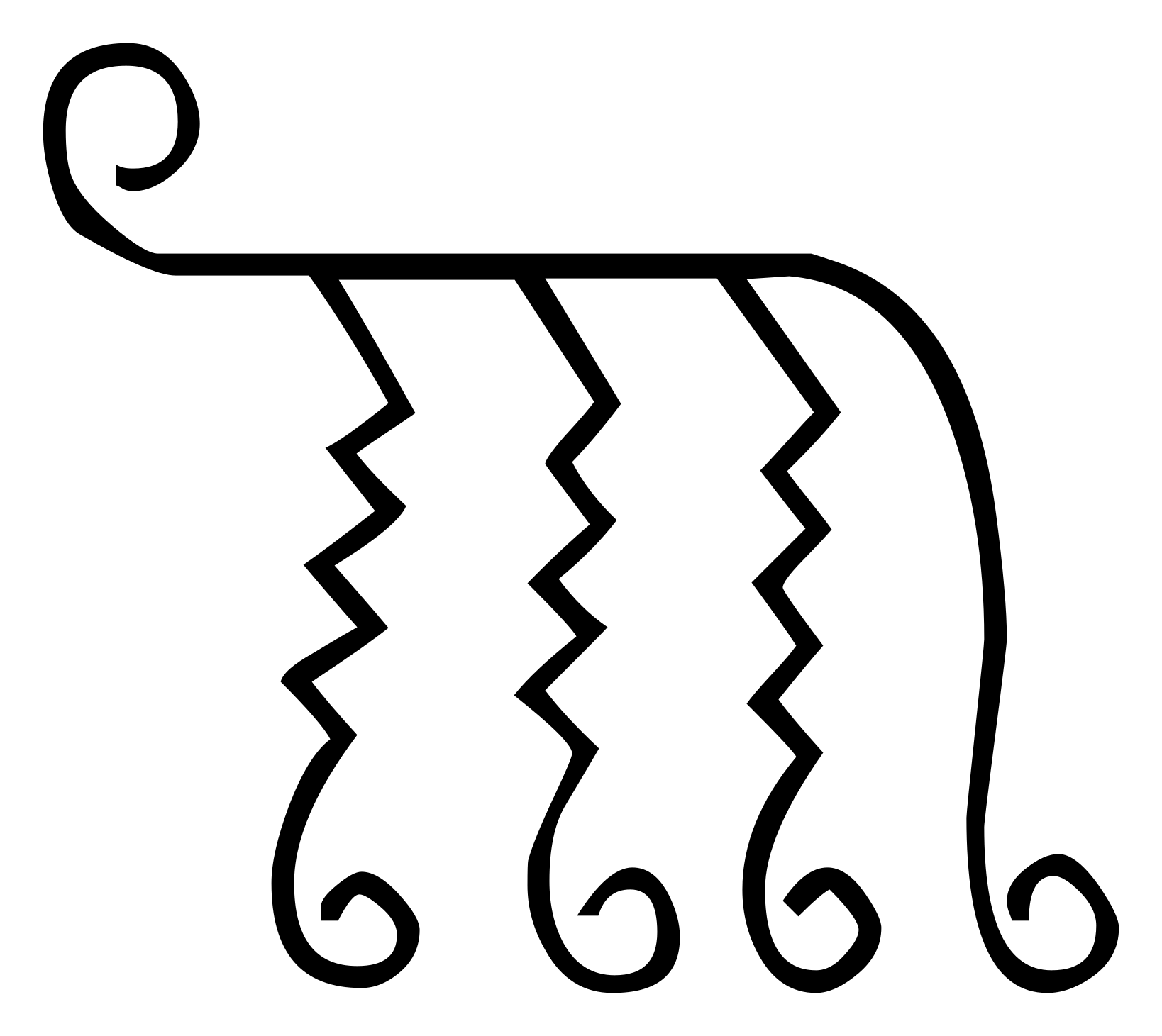
Traditionally considered to represent a piece of the Eye of Horus or wḏꜣt (literally “Intact One”) D10 (𓂀), and specifically one of the markings of a falcon’s head found below the eye. In Egyptian mythology, the eye was torn out and dismembered by Set, and subsequently pieced back together and restored by Thoth. The series of Egyptian fractional measures of grain would then be either directly based on the pieces of the eye or would have eventually come to be interpreted as such. In fact, however, while the hieroglyphic signs certainly represent pieces of the eye, their usage as measures is uncertain, as the evidence mainly comes from votive cubits whose texts are extremely difficult to interpret; meanwhile, the hieratic forms of the signs are well attested as measures, but their earlier forms do not closely resemble pieces of the eye. The equivalence of the hieratic and hieroglyphic signs has thus become questionable, and the direct origin of the measures as pieces of the eye is not likely, although their later reinterpretation as such is possible.
Used as a numeral for ¹⁄₆₄ in (mostly hieratic) measures of grain.
Has a specialized or contextual function
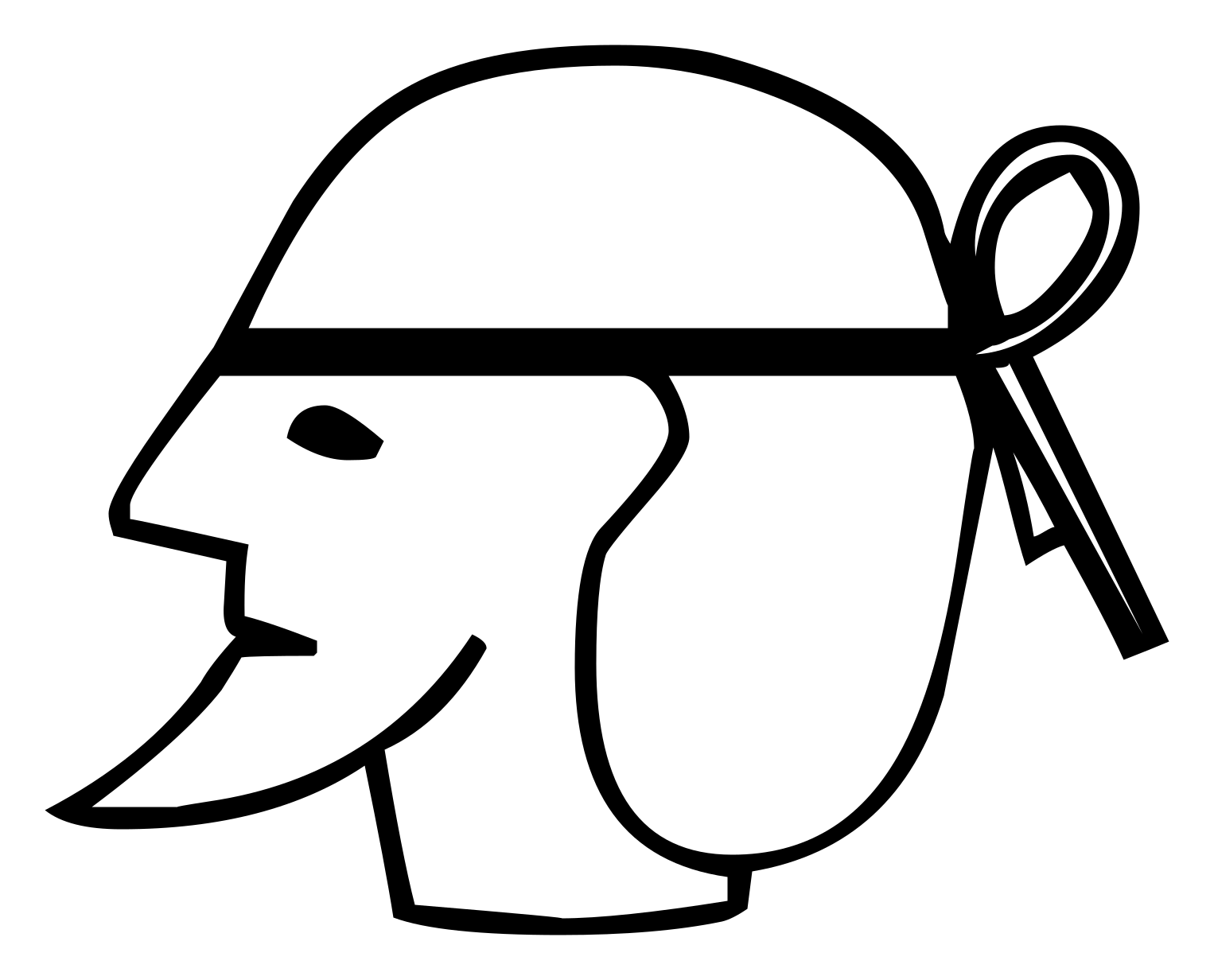
Biliteral hieroglyph for qd.
Has a specialized or contextual function
Logogram 1/64
Represents a complete word or concept
The left lower marking of an udjat eye.
Has a specialized or contextual function
Logogram: 1/64 — 1/64 heqat
Represents a complete word or concept
Attested Examplesfrom the TLA corpus
𓈐𓈋𓏲𓈒𓏥 𓂆
wꜣḏ.w 1/64
Malachit: 1/64 (Hekat = 1 MR-Dja).
Source: Thesaurus Linguae Aegyptiae corpus (CC BY-SA 4.0) — translations in German.
Quick Info
- Gardiner Code
- D16
- Unicode
- U+13086
- Category
- D
- Meanings
- 5
- Transliterations
- 4
- Source
- both
- Text examples
- 1