Meanings
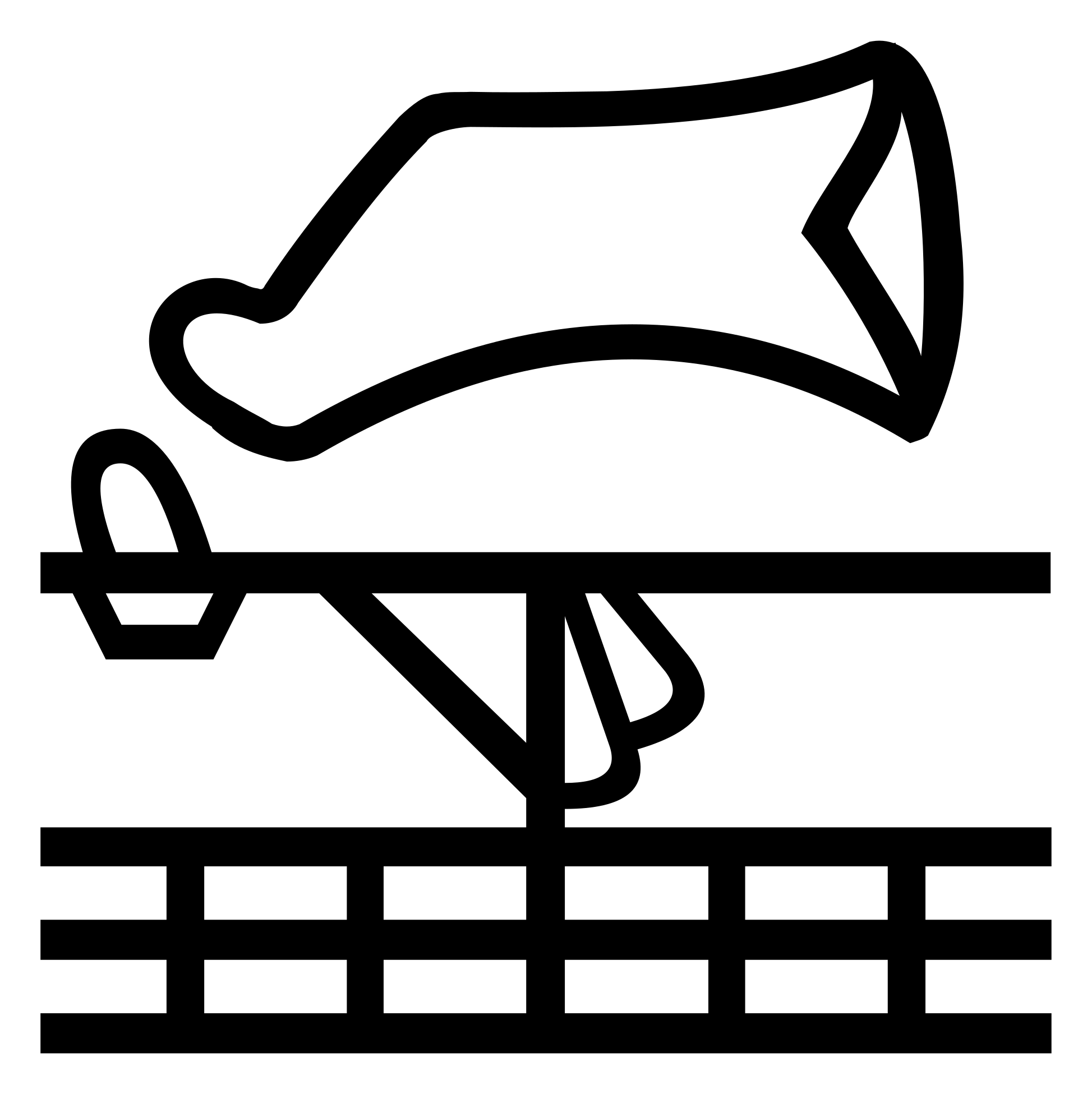
Representing an irrigation canal. In hieroglyphic text, this glyph developed from a variant of N36 (𓈘) in the 11th Dynasty, which in turn had partly supplanted N22 (𓈆), its variants N21 (𓈅) and N20 (𓈄), and Aa12 (𓐚) in the 8th Dynasty. However, in hieratic, a glyph much like this one was already in use since the Old Kingdom. Ultimately, the glyph N23 remained in use through the 18th Dynasty, when it was largely again supplanted by N21 (𓈅) as a determinative for land. As part of a determinative for time, this glyph instead developed from Z4B (𓐅), which became conflated with the irrigation-canal glyph.
Determinative for irrigated land, as in tꜣ (“land”).
Clarifies the meaning of other signs
Used in ra:N23, a determinative for time, as in tr (“season”), rk (“time”).
Clarifies the meaning of other signs
Used in mw-N36:N23, a composite determinative for bodies of water.
Clarifies the meaning of other signs
Classifier geographical location
Clarifies the meaning of other signs
An irrigation canal.
Has a specialized or contextual function
Determinative: Irrigated land
Clarifies the meaning of other signs
Determinative: Time
Clarifies the meaning of other signs
Attested Examplesfrom the TLA corpus
𓂋 𓇾𓈇𓏤
r tꜣ
(Dann) weg damit (wörtl.: auf dem Boden)!
𓉐𓂋𓂻 𓁷 𓇾𓈇
pri̯ ḥr tꜣ
Komm zur Erde herauf!
𓈀𓏤𓈇 𓅓𓂺 𓆑
ꞽw m-bꜣḥ ⸗f
Eine Insel ist vor ihm.
Source: Thesaurus Linguae Aegyptiae corpus (CC BY-SA 4.0) — translations in German.
Quick Info
- Gardiner Code
- N23
- Unicode
- U+13207
- Category
- N
- Meanings
- 7
- Transliterations
- 5
- Source
- both
- Text examples
- 3