Meanings
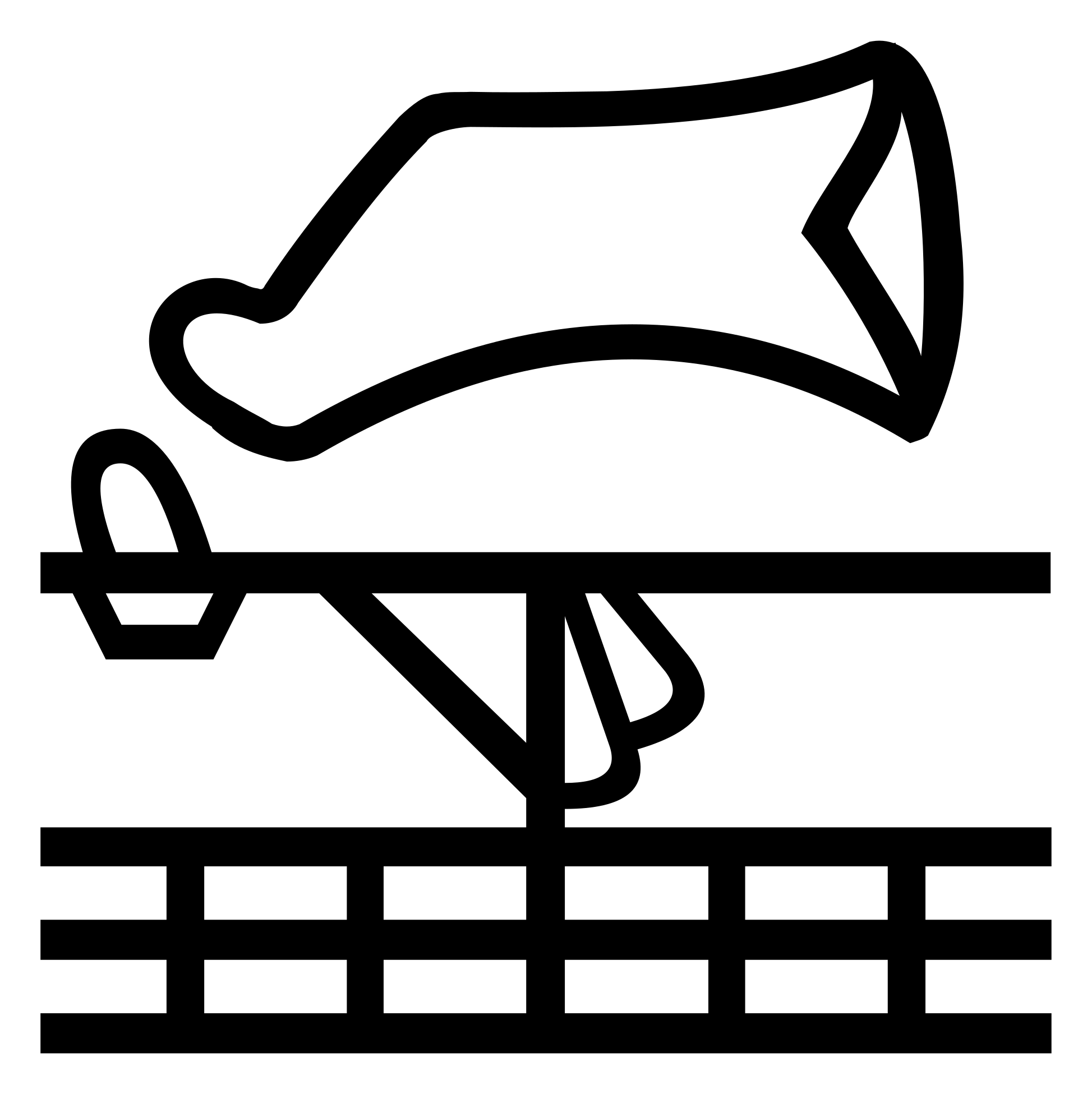
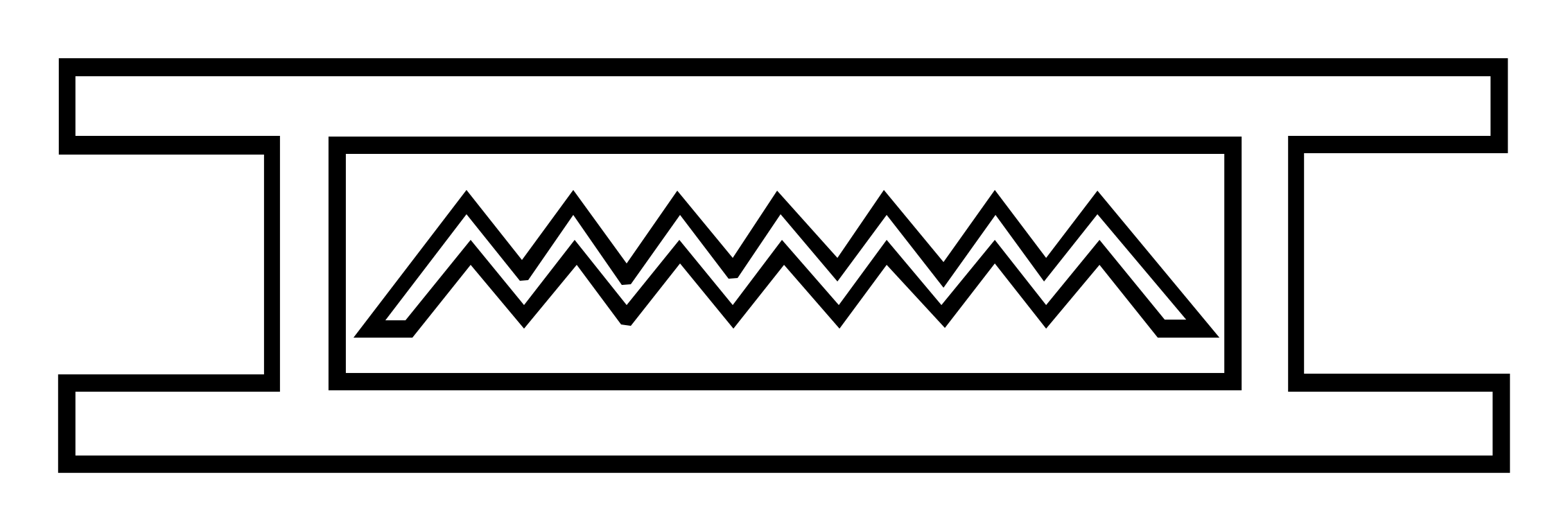
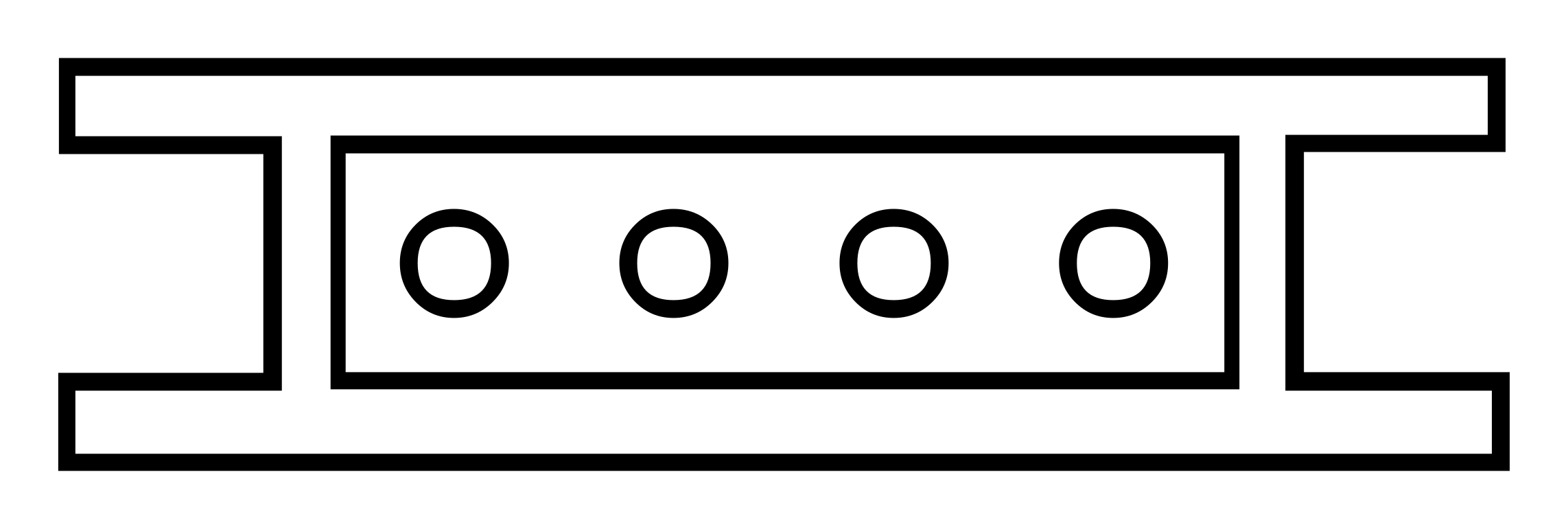
Representing a canal bordered by banks and dikes. In detailed Old Kingdom depictions the water area is covered with zigzagging ripples, . Sometimes the canal is shown curved rather than straight, , especially in the Old Kingdom. This glyph partly supplanted N22 (𓈆), its variants N21 (𓈅) and N20 (𓈄), and Aa12 (𓐚) as a determinative for cultivated land in the 8th Dynasty, but in this function eventually changed into the form N23 (𓈇) in the 11th Dynasty. The water in the canal is conventionally green, or sometimes (lighter) blue; the outline is (darker) blue, perhaps representing mud brick. The phonogrammatic value of mr is derived by the rebus principle from its use as a logogram for mr (“canal”).
Biliteral phonogram for mr.
Represents a sound or phonetic value
Biliteral phonogram for mj, as in mjzt (“liver”), mjꜥḥꜥt (“tomb”).
Represents a sound or phonetic value
Logogram for mr (“canal”).
Represents a complete word or concept
Determinative for bodies of water, interchanging with 𓈙 (S) in early times.
Clarifies the meaning of other signs
Used in mw-N36:N23 or mw-N36, a composite determinative for bodies of water.
Clarifies the meaning of other signs
Determinative for irrigated land.
Clarifies the meaning of other signs
Phonemogram
Has a specialized or contextual function
A canal.
Has a specialized or contextual function
Logogram: Mr — canal
Represents a complete word or concept
Determinative: River, lake, sea
Clarifies the meaning of other signs
Phonogram: Mj
Represents a sound or phonetic value
Attested Examplesfrom the TLA corpus
𓈖𓎼𓈘
ngꜣ.w
Ein Langhornrind.
𓂋𓈖 𓈖 𓈘
rn n mr
Ein Jungtier von der Viehweide,
𓈖𓎼 𓈖 𓈘
ng(ꜣ.w) n mr
Ein Langhornrind der Weide.
Source: Thesaurus Linguae Aegyptiae corpus (CC BY-SA 4.0) — translations in German.
Quick Info
- Gardiner Code
- N36
- Unicode
- U+13218
- Category
- N
- Meanings
- 11
- Transliterations
- 10
- Source
- both
- Text examples
- 3