O39
𓊌Transliteration
Shape tags
Meanings
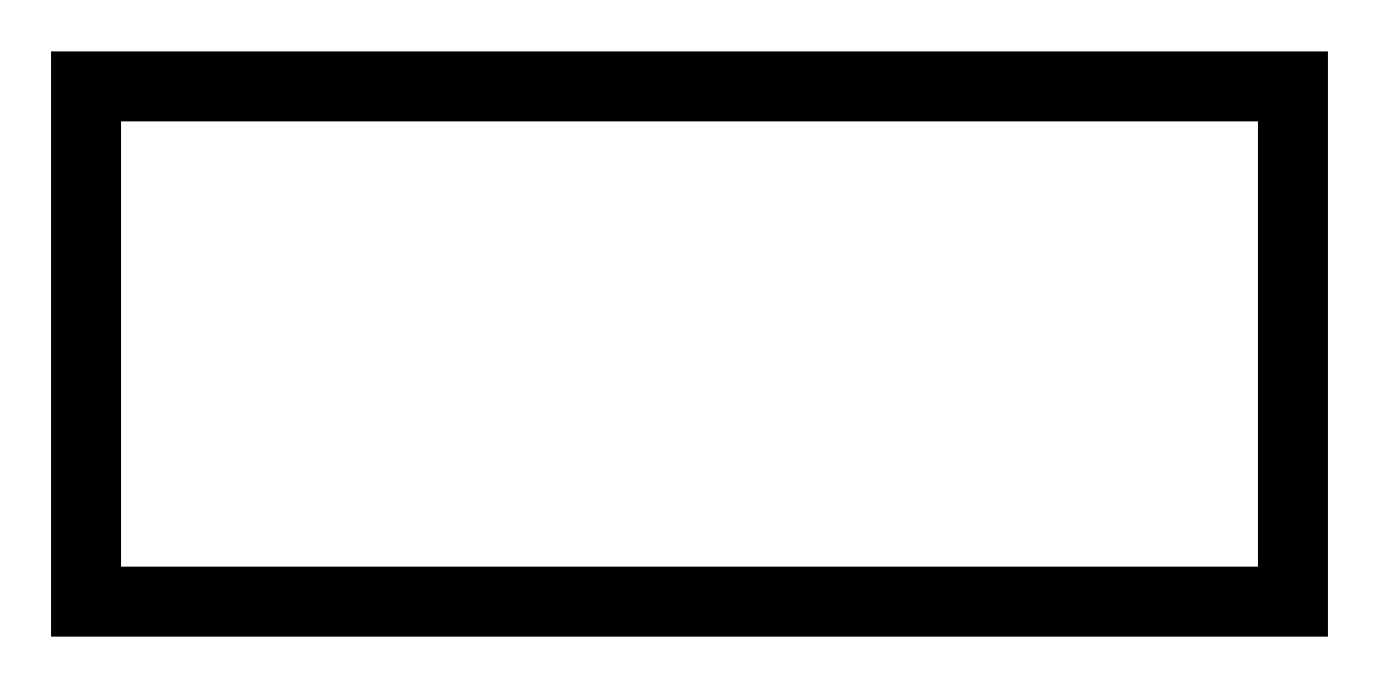
Representing a cut block of stone or brick. The dimension of the sign varies, and it may be written long like the pool glyph 𓈙 (S), with which it should not be confused; the stone glyph was often written shorter to distinguish it. The stone glyph was conventionally colored either white (in many examples, representing a whitish stone such as limestone) or blue (in other examples, perhaps representing a mud-brick—as Egyptian scribes generally used a limited color palette that did not include grey or brown—or a block of dark stone such as basalt or greywacke, although blue coloration has also been interpreted as mere confusion with the pool glyph). Compare the Chinese character 石.
Logogram for jnr (“stone”).
Represents a complete word or concept
Determinative for stone, as in jnr (“stone”), ꜥꜣt (“precious stone”), dbn (“deben, a measure of weight”), ꜥr (“pebble”), ḏbt (“brick”).
Clarifies the meaning of other signs
Classifier stone, brick, pebble
Clarifies the meaning of other signs
A rectangular stone slab or brick.
Has a specialized or contextual function
Determinative: Stone
Clarifies the meaning of other signs
Attested Examplesfrom the TLA corpus
𓈎𓂋𓇓𓅱𓊌𓏤
qrs.w
Sarg.
𓊌𓏤 𓌙𓋴𓏭𓀀
ꞽnr nḥsꞽ
der Stein(metz?) $Nḥsj$,
𓍑𓄿𓊛 𓆑 𓃀𓈟𓊌
ḏꜣi̯ =f bꞽꜣ
Möge er das Firmament überqueren.
Source: Thesaurus Linguae Aegyptiae corpus (CC BY-SA 4.0) — translations in German.
Quick Info
- Gardiner Code
- O39
- Unicode
- U+1328C
- Category
- O
- Meanings
- 5
- Transliterations
- 7
- Source
- both
- Text examples
- 3