O49
𓊖Transliteration
Shape tags
Variants (1)

Meanings
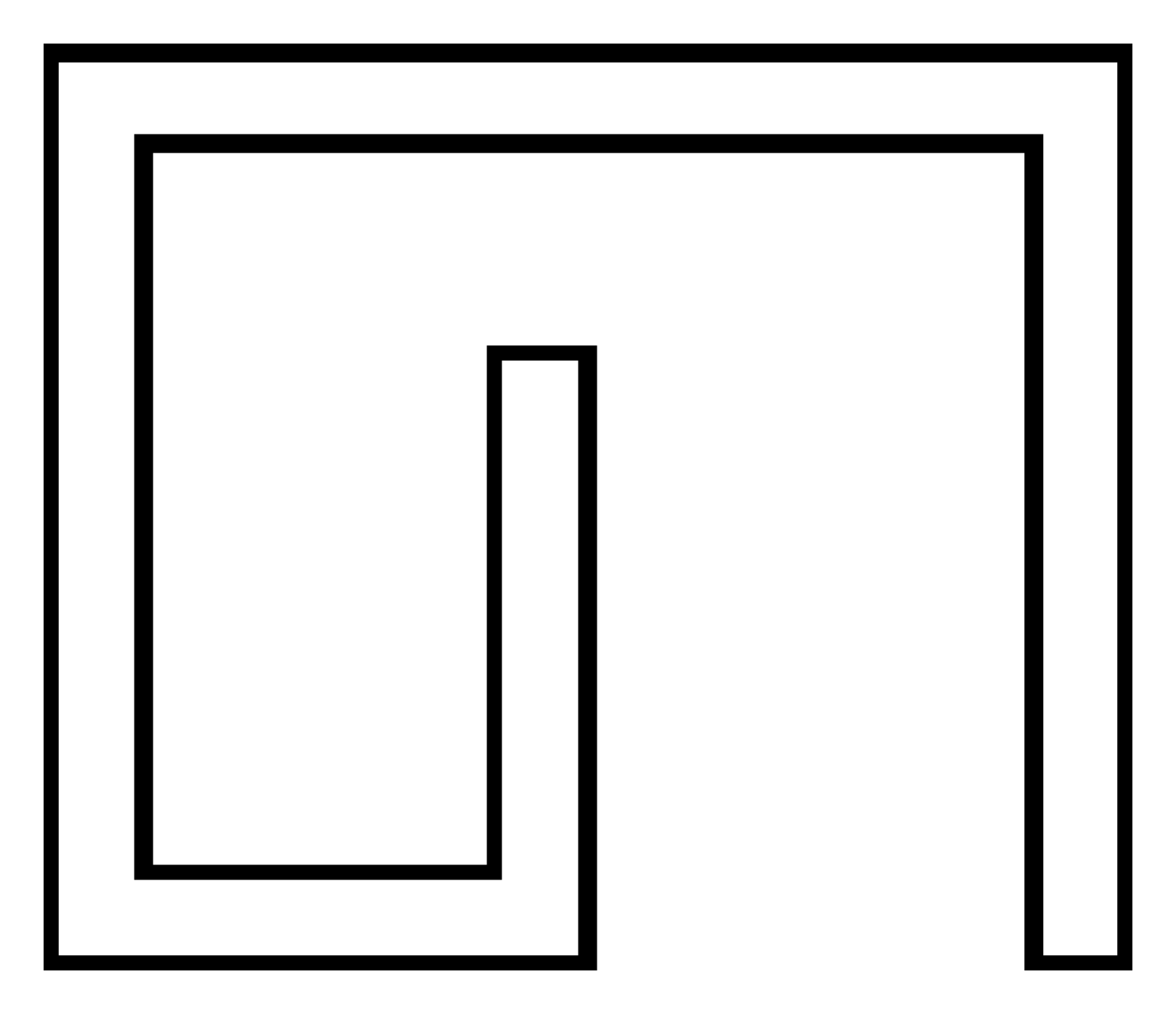
Representing a round settlement, walled and divided by crossroads. Similar settlements are archaeologically attested in Upper Egypt since the earliest periods of urbanization, and this hieroglyph is also attested very early. In the Old and Middle Kingdoms the streets are occasionally found in a different orientation , horizontal and vertical instead of diagonal; this is even more frequent in inscriptions of the Heracleopolitan Period and 11th dynasty. Compare the Chinese character 囗.
Logogram for nwt (“town, city”).
Represents a complete word or concept
Determinative in names of settlements and inhabited places, as in kmt (“Egypt”), wꜣst (“Thebes”), spꜣt (“estate, farm”).
Clarifies the meaning of other signs
Logogram (city, village)
Represents a complete word or concept
A plan of a crossroads in a village.
Has a specialized or contextual function
Logogram: Njwt — city
Represents a complete word or concept
Determinative: Inhabited area
Clarifies the meaning of other signs
Attested Examplesfrom the TLA corpus
𓆳 𓊢 𓊪𓊖
rnp.t ꜥḥꜥ pꞽ
Jahr: Aufenthalt in Pe.
𓏎 𓋫𓏏𓊖
ꞽn.w sṯ.t
Lieferungen aus Setjet.
𓅓 𓉺𓏤𓊖
m ꞽwn.w
in Heliopolis
Source: Thesaurus Linguae Aegyptiae corpus (CC BY-SA 4.0) — translations in German.
Quick Info
- Gardiner Code
- O49
- Unicode
- U+13296
- Category
- O
- Meanings
- 6
- Transliterations
- 8
- Source
- both
- Text examples
- 3